Burst or split pipe
A spray inside a wall or a ceiling that sags. See burst pipe repair for what the plumber does first.
Water on the floor, sewage in the tub or a heater that went cold overnight. Describe the situation to the dispatcher on the 24/7 line, who lines up a contractor for your area.
Calls only, with no forms to fill in. A 2 a.m. call is answered the same way as a noon call.
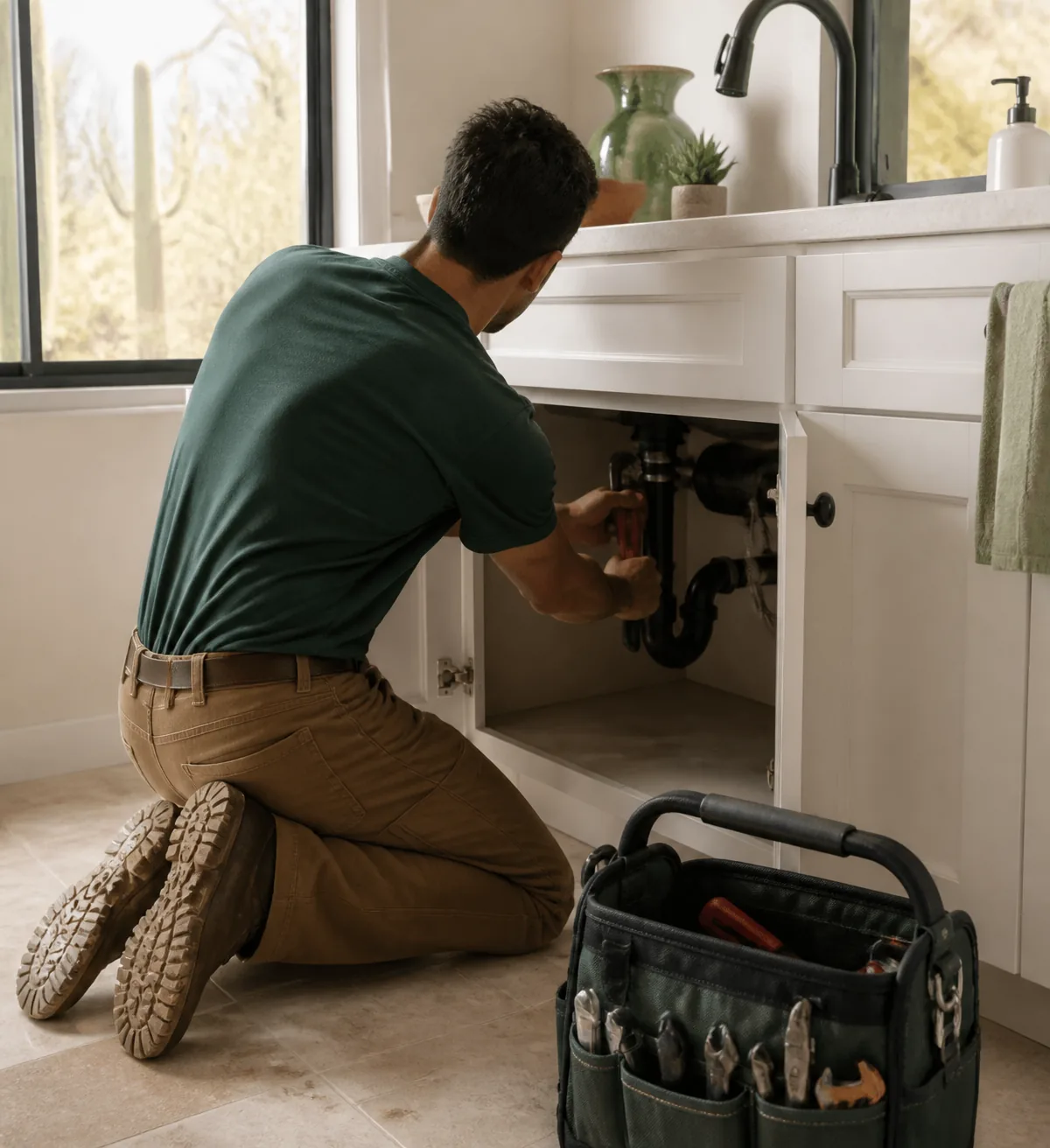
Not sure which service fits? Start from what your eyes, ears and nose report, and the page that fits will explain the probable cause.
See every serviceA meter that never rests, a stain spreading across a ceiling or a wet patch in the yard. Start with leak detection, slab leaks or a burst pipe.
Gurgling fixtures, a smell from the floor drain or water backing into the tub. Options run from drain cleaning to a camera inspection.
No hot water, a rumbling tank or a puddle in the garage. Read about repair, replacement and tankless service.
Toilets, faucets, disposals, gas lines, softeners and backflow devices all have a page with the symptoms and the likely fix.
A slow drip can be scheduled. These four keep damaging the house for as long as they run.
A spray inside a wall or a ceiling that sags. See burst pipe repair for what the plumber does first.
Two or more fixtures backing up together points at the main line. Sewer line repair may follow a camera look.
A tank dripping on the garage slab calls for a quick supply shutoff. Details sit on the water heater repair page.
A meter that moves with all taps off suggests an unseen leak. Read about leak detection before anyone cuts into a wall.
None of this needs tools. It keeps a bad hour from turning into a bad week.
Easy faults announce themselves. Others hide in a slab, a wall or a buried line, and the right first step is a diagnosis.
Hidden water can sit behind tile, under a slab or along a buried service line. Narrowing it down first keeps the repair opening small.
How a leak search worksWipes, grease and roots cause most repeat blockages. A camera shows which one you have.
See what the camera findsAge, scale and the cost of repair decide the answer. The service pages lay out the trade-offs.
Compare the optionsEach page that follows lists the symptoms, explains how the diagnosis goes and names what changes the price.
Water escaping where it should not be, and the pipe that carries it.
Slow fixtures, repeat clogs and lines that fail under the yard.
Hot water on demand, plus the filters and softeners that protect it.
Everyday fixtures, gas piping, backflow devices and buildings with more than one tenant.
Sodden drywall and floors call for drying on top of the pipe repair. Restoration has its own page, water damage restoration, with a separate phone line.
Local conditions shape which problems turn up. These are the ones worth knowing before you call.
The Fountain Hills Sanitary District says it is responsible for the main sewer line in the street. The homeowner is responsible for the line on private property, including damage from roots.
That split decides who pays when a backup traces to a bad stretch of pipe. A plumber can run a camera and show which side of the property line the fault is on.
The District also asks residents not to flush wipes, even ones sold as flushable, or pour grease down drains. Both are common reasons a home line needs drain cleaning again.
The town was established in 1970, so the housing mix includes homes with decades of wear on supply pipe, shutoff valves and water heaters. A valve untouched for years may refuse to work on the day it matters.
The 2020 census counted about 17 percent of the town's housing units as vacant, which includes seasonal homes. Water can leak in a vacant house for weeks, so reading the meter on arrival is worthwhile.
EPCOR supplies water to Fountain Hills from surface water sources, and a public summary of its data lists about 5.3 grains per gallon, which counts as moderately hard. Minerals like this settle inside tank heaters and tankless units over time.
Scale shortens heater life and clogs fixtures. See tankless service for flushing, and softener installation if you want to treat the water itself.
Elevation changes block to block in a hillside town, and pressure can differ between neighboring streets. High pressure strains fixtures and hoses, while low pressure often points to a failing valve or a partial blockage.
A plumber can read the pressure at a hose bib in a few minutes. Ask for the number before replacing anything.
The dispatcher hears you out, asks about the fixture and what it is doing, and then hands you to an independent contractor who serves your address.
Say what you see. No jargon is needed.
Ask the contractor for the price and what it covers.
Ask what each option costs and how long it should last.
Your address is checked during the call.
Four steps, with a person on the phone for the first one.
Give your address and tell the dispatcher what is going on.
Mention the room, the sounds and what you have already shut off.
The contractor explains the likely cause, the repair and the price.
Work begins once you agree on the scope and the cost.
The line covers ZIP codes 85268 and 85269 in town, along with nearby communities that border it. Each page below describes that community's water, housing and common plumbing faults.
Coverage is settled by street address, so tell the dispatcher where you are. If your town is missing from the list, call anyway and ask.
Need something specific? The dispatcher can answer it on the phone.
The phone is answered at all hours, holidays included. A dispatcher asks what is happening and matches you with a contractor who covers your address. When someone shows up is that contractor's decision, so get an estimate of the arrival time before the call ends.
Cost depends on the failure, the pipe material, how hard it is to reach and the hour. Pricing is set by the contractor, so ask for the figure and what it includes before any work begins.
Turn the main water valve to closed. You will find it beside the meter or at the spot where the supply pipe comes into the house. Keep clear of outlets and appliances if water is near them, then call the line.
The Fountain Hills Sanitary District says it maintains the main sewer line under the street, and owners are responsible for the pipe on their own property, including root damage. A plumber can tell you which side the clog is on.
Yes. When tubs, sinks and toilets all struggle together, the blockage is usually in the main line. Stop running water, avoid flushing and call before the backup reaches the floor.
Close the main valve as you leave and jot down the meter reading. On your return, check the reading again and look under sinks and around the heater before turning anything back on.
Scottsdale, Rio Verde and Fort McDowell have their own pages. Tell the dispatcher your street address and they confirm coverage during the call.
No. Head outside and do not flip switches or light anything. From out there, reach 911 or the gas company. Call this line about repairs after the supply has been made safe.
Dial the 24/7 number, read out your address and say what has gone wrong. Everything after that goes through the dispatcher.
Fountain Hills, Arizona and the surrounding area.
